
Atlas Designs Scales Its Core Basement Apartment Permit Practice with Lidar Precision
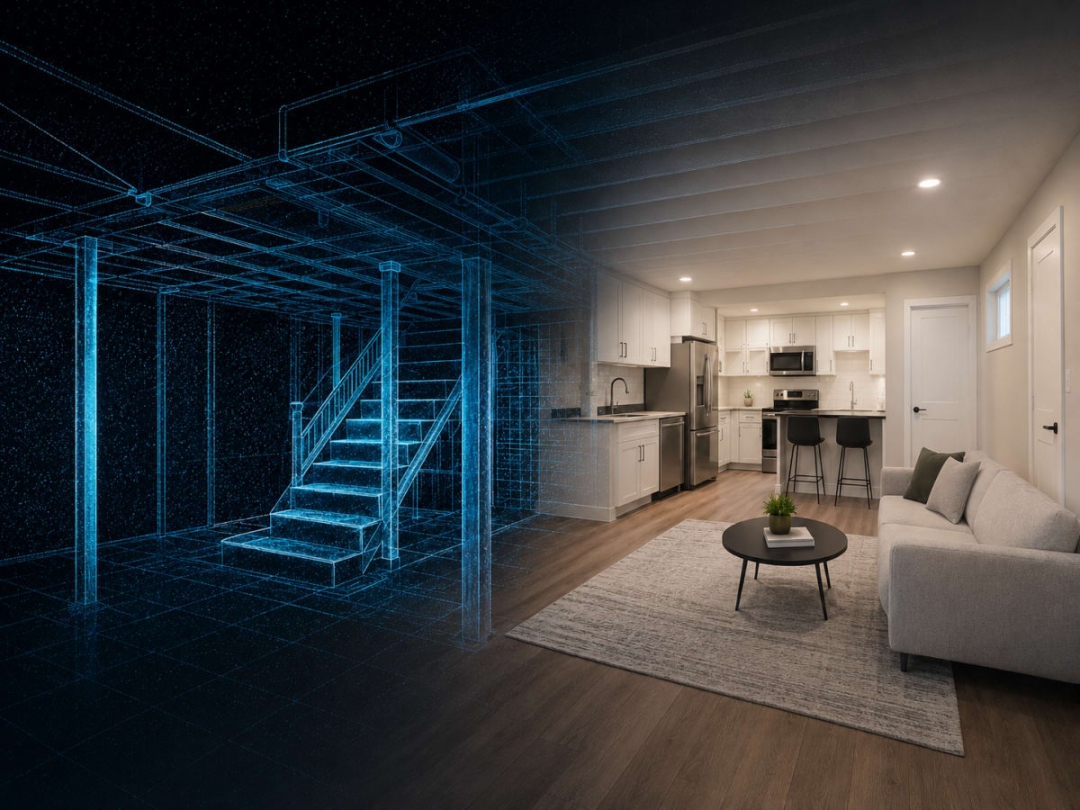
Atlas Designs, a permit and BCIN design firm whose practice has long centred on code-compliant residential work, is scaling its core legal basement apartment service to keep pace with growing demand from Ontario homeowners pursuing compliant rental income. Legal basement conversions have been a cornerstone of the firm’s portfolio for years; the latest step deepens that specialty with high-precision Lidar scanning and expanded capacity rather than adding a new line of business.
The push comes as municipalities across the province continue to permit secondary dwelling units in response to housing affordability pressures. Creating a legal basement apartment requires adherence to the Ontario Building Code (OBC), proper permit acquisition, detailed fire separation specifications, and professional design expertise to ensure occupant safety, comfort, and financial return for property owners, a discipline Atlas Designs has practised through hundreds of residential files.
The firm’s BCIN-certified designers ensure every basement apartment conversion meets stringent OBC requirements. These include fire-rated floor and ceiling assemblies, egress windows meeting the Code’s minimum 0.35 m² (about 3.8 sq ft) unobstructed opening, independent HVAC provisions, and code-compliant mechanical ventilation. The designers work directly with municipal building departments to navigate the jurisdiction-specific regulations that vary across Ontario communities, relationships built over years of repeat submissions.
“Basement apartment permits are our bread and butter, it’s the work we know better than anything else,” said George Saeed, Principal and Owner at Atlas Designs. “Homeowners frequently underestimate the technical complexity involved, so our role extends well beyond drafting plans. We provide a complete technical solution that addresses structural requirements, fire safety protocols, plumbing and electrical systems, and the energy-efficiency standards the OBC mandates.”
To sharpen that established service, Atlas Designs has integrated advanced Lidar scanning technology into its basement design process to capture existing conditions with millimetre-level precision. Traditional measurement methods can introduce errors that lead to costly revisions during construction. Lidar produces a high-accuracy digital representation of basement spaces, documenting ceiling heights, utility locations, structural elements, and spatial dimensions, which feeds directly into Revit, the industry-standard Building Information Modeling (BIM) software. The result is construction drawings that integrate cleanly with the existing home structure.
The permit drawing package provided by Atlas Designs includes architectural plans, structural details, mechanical and electrical layouts, plumbing schematics, and fire separation specifications. Each package is tailored to the municipality where the property is located, incorporating local by-laws on ceiling heights, window-well dimensions, parking requirements, and entrance configurations. The firm also coordinates with structural engineers and other consultants when modifications to load-bearing elements are necessary.
For Toronto homeowners, the financial case for a legal basement apartment is substantial. Rental income from a properly designed and permitted unit can offset mortgage costs while increasing overall property value. Non-compliant conversions, by contrast, expose owners to significant risks, insurance claim denials, municipal fines, forced tenant evictions, and costly remediation work.
Atlas Designs has refined its service delivery over many projects to meet homeowners at any stage of the conversion. Initial consultations assess feasibility based on existing basement conditions, ceiling heights, window openings, and utility capacity. Once feasibility is confirmed, the firm conducts on-site Lidar scanning and develops preliminary design concepts. After the homeowner approves the design, Atlas Designs produces the full permit drawing set and submits it to the appropriate municipal building department.
While basement apartments remain the heart of the practice, the firm’s residential services portfolio also includes custom home design, additions, renovations, and other accessory dwelling units. Atlas Designs maintains a facility in Whitchurch-Stouffville and serves clients throughout the Greater Toronto Area and surrounding regions.
“Code compliance is not optional, and shortcuts create long-term liabilities,” added Saeed. “After years focused on this work, our approach prioritizes safety, regulatory adherence, and design quality. Homeowners who invest in proper planning and professional design protect themselves legally and financially while creating safe, comfortable living spaces.”
Atlas Designs continues to monitor regulatory changes at the provincial and municipal levels that affect basement apartment conversions. Recent amendments to the OBC and evolving municipal zoning by-laws call for ongoing professional education and adaptation of design standards, something the firm has tracked closely throughout its time specializing in the field.
About Atlas Designs
Atlas Designs is a construction design firm located in Whitchurch-Stouffville, Ontario, specializing in code-compliant residential and commercial projects. Legal basement apartment permit drawings are a core focus of the practice. The company provides architectural design, permit drawings, and technical consulting services to homeowners, builders, and developers across Ontario. With BCIN-certified designers and advanced technology integration, Atlas Designs delivers precision solutions for basement apartments, custom homes, additions, and renovations.
For more information or to schedule a consultation, visit https://atlasdesigns.ca/contact/
Media Contact
Company Name: Atlas Designs
Contact Person: George Saeed
Email: Send Email
City: Whitchurch-Stouffville
Country: Canada
Website: https://www.atlasdesigns.ca

