
Bima Reports More Than 300% Increase in Demand for Artificial Christmas Trees with 3D Needles
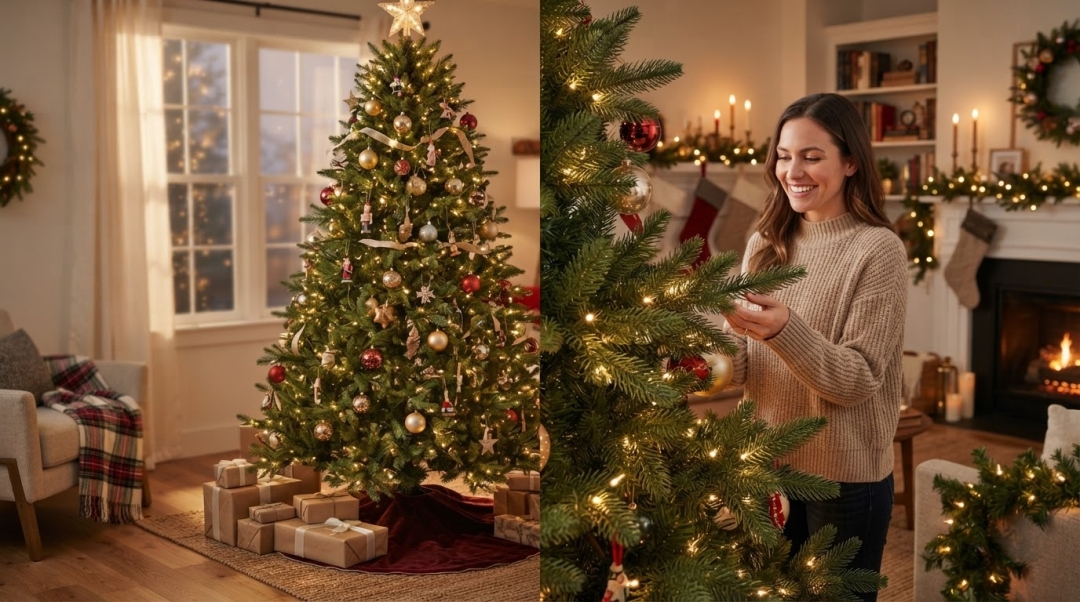
VARAŽDIN, Croatia – September 23, 2026 – Croatian home and seasonal retailer Bima has recorded an increase of more than 300% in demand for artificial Christmas trees featuring molded three-dimensional needles, according to the company’s internal sales data.
The increase indicates growing interest in artificial trees that combine reusability with a more natural appearance. Bima reports that shoppers are increasingly considering branch construction, tree shape, available space and expected years of use when selecting a Christmas tree.
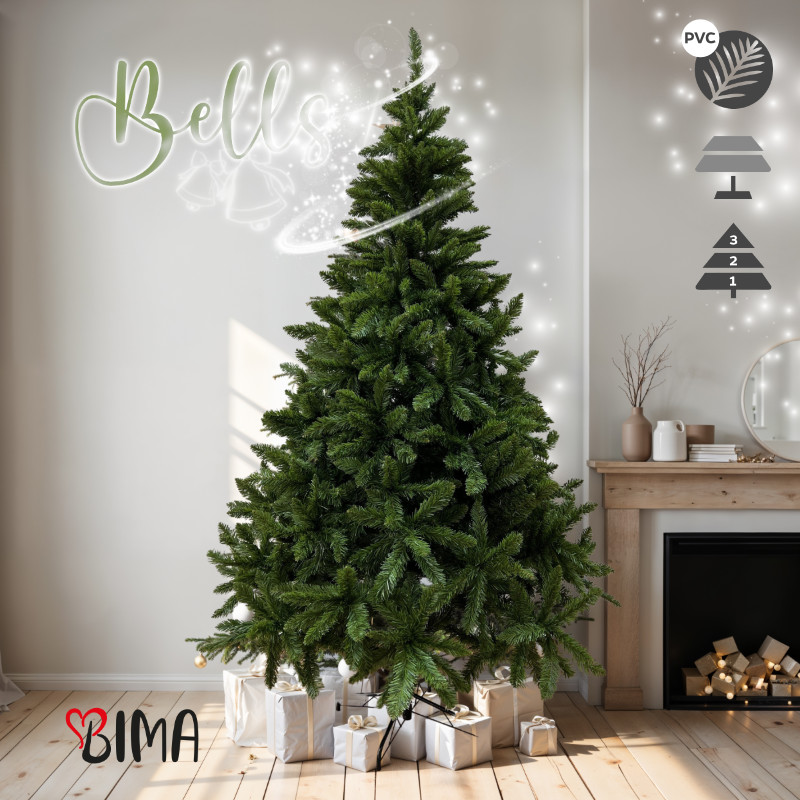
Traditional artificial trees are commonly made with flat PVC foliage. Newer models use molded three-dimensional branch tips designed to recreate the depth, shape and irregularity of natural evergreen branches.
Many contemporary models combine the two construction methods. Molded 3D tips are placed on the visible outer branches, while PVC foliage is used throughout the interior to provide density and volume. This combination allows manufacturers to improve the appearance of artificial trees while offering models across different price ranges.
That trade-off is becoming less obvious.
A new generation of artificial Christmas trees uses molded three-dimensional tips designed to recreate the shape, volume and irregularity of natural evergreen branches. At the same time, those features are moving beyond the highest-priced premium trees and into more accessible price ranges.
European home and seasonal retailer Bima says it has seen demand for Christmas trees with 3D needles increase by more than 300%.
And while the data comes from Europe, the underlying consumer shift should look very familiar to Americans.
83% of U.S. households planning a tree chose artificial
Artificial Christmas trees are already the dominant choice in the United States.
A nationwide Ipsos survey conducted for the American Christmas Tree Association in October 2025 found that 83% of U.S. households planning to display a Christmas tree intended to choose an artificial tree.
The survey included 1,033 adults across all 50 states and the District of Columbia.
Cost is increasingly part of the conversation as well. Another national survey found that 84% of Americans believe Christmas decorations have become more expensive in recent years.
For families watching their holiday budgets, the economics of buying the tree every year versus buying it once are difficult to ignore.
A fresh-cut tree is a recurring expense. Depending on where a family lives and shops, there may also be transportation, a stand and eventual disposal or recycling to consider. The following Christmas, the purchase starts again.
An artificial tree concentrates most of that expense in the first year and can then be stored and reused.
U.S. industry estimates have put the average price of a six-foot fresh tree at around $80, compared with approximately $100 for an artificial tree of the same size, although actual prices vary widely by region, retailer, size and quality.
At those prices, an artificial tree reused over multiple Christmases can quickly change the cost-per-season calculation.
“I finally added up what we had spent buying a fresh tree year after year,” said one artificial-tree shopper describing the decision to switch. “I realized I wasn’t really comparing the price of one real tree with one artificial tree. I was comparing one artificial tree with five, six or ten real ones.”
The fake tree no longer has to look fake.
Price and convenience explain only part of the shift.
Artificial trees themselves have changed.
The classic artificial tree relies heavily on thin PVC strips cut to resemble evergreen needles. PVC branches remain common and continue to provide an affordable way to create fullness throughout a tree.
Three-dimensional construction approaches the visible parts of the tree differently.
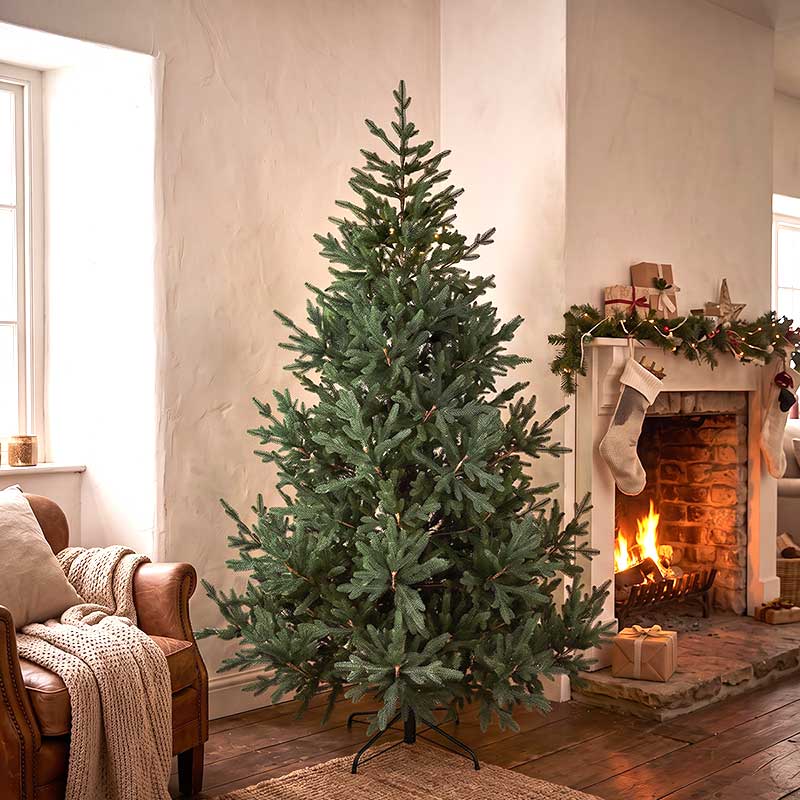
Instead of relying entirely on flat strips, individual branch tips are molded into three-dimensional shapes designed to resemble the structure of natural evergreen growth. The needles have depth, shape and volume.
The difference is most noticeable at the ends of the branches, exactly where the tree remains visible between lights and ornaments.
Many newer trees combine both construction methods. Molded 3D tips appear on the outer branches where they can be seen, while traditional PVC foliage fills the interior and creates density.
The result addresses one of the oldest complaints about artificial Christmas trees: they look artificial.
“I always preferred a real tree because artificial ones looked too perfect and too plastic,” another shopper said. “The first time I saw one of the newer 3D trees fully opened, I changed my mind. The branches weren’t flat, and I didn’t feel like I needed hundreds of ornaments just to hide the tree.”
Demand for 3D trees jumps more than 300%
Bima’s sales data suggests shoppers are noticing the difference.
The retailer has recorded an increase of more than 300% in demand for artificial Christmas trees featuring 3D needles.
That does not mean shoppers have abandoned traditional PVC trees. Classic artificial trees remain an important part of the market, particularly for budget-conscious households.
What has changed is the space between a basic artificial tree and an expensive luxury model.
Realistic construction is appearing across a wider range of prices.
Bima’s Christmas tree assortment on bima-shop.hr, for example, ranges from traditional artificial trees to models featuring 3D needles, snow-covered finishes and slim profiles designed for smaller spaces.
The idea that a realistic artificial Christmas tree requires an extravagant holiday budget is becoming outdated.
Americans are already thinking about the cost of Christmas
That price point could be particularly relevant in the United States.
A 2025 national survey conducted by Ipsos found that 77% of Americans believed rising prices could negatively affect the holiday season, while 70% said they would change their shopping behavior if holiday prices increased. Among those responses, 46% said they would cut spending and 41% would buy fewer decorations or gifts.
For an item that can potentially be used for many Christmases, longevity therefore becomes part of the purchase decision.
An artificial tree costing more upfront can become less expensive on a per-season basis the longer it remains in use.
There is also the annual ritual of dealing with a fresh tree after Christmas.
For some families, hauling the tree outside, cleaning fallen needles and following local tree collection or recycling rules are simply part of the tradition.
For others, they are precisely the reasons to switch.
“We live in an apartment, and getting a real tree upstairs was fun exactly once,” another artificial-tree owner said. “Getting it back downstairs in January, with needles everywhere, was less charming. Now the tree goes back into storage and comes out again next Christmas.”
Real trees still have something artificial trees cannot reproduce
None of this means the fresh Christmas tree is disappearing.
The smell of a real fir, the trip to a Christmas tree farm and the fact that no two natural trees look exactly alike remain traditions that artificial trees cannot fully reproduce.
For many families, those experiences are worth buying a new tree every year.
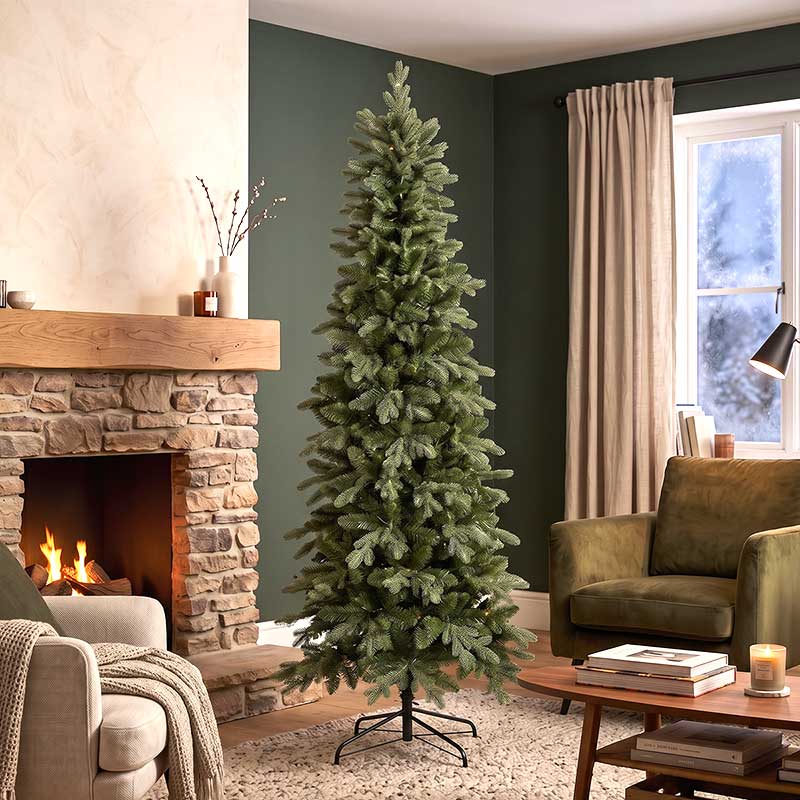
Artificial trees solve a different set of problems. They can be reused, purchased in dimensions that fit a particular room and stored until the following season. Slim trees can provide height without taking over a small living room, while flocked and snow-covered versions offer a finished decorative style before the first ornament goes on.
The development of molded 3D needles is now addressing the aesthetic gap as well.
That may help explain why the artificial tree category is changing so quickly.
The artificial Christmas tree many adults remember from childhood is still available. But next to it now stands a very different product: a tree with molded branches, natural-looking irregularities and enough realism that some shoppers who once rejected artificial trees are reconsidering them.
Bima’s more than 300% increase in demand for 3D models suggests that shoppers are not simply choosing between real and artificial anymore.
They are deciding how real they want their artificial tree to look, how many Christmases they expect it to last and how much they are willing to spend to get there.
About Bima
Bima is a Croatian retailer with more than 35 years of experience in home, kitchen, children’s, gift and seasonal products. The company operates a network of physical stores and the bima-shop.hr online store. Its Christmas collection includes traditional artificial trees as well as 3D, slim and snow-covered models across multiple sizes and price points.
Media Contact
Company Name: Bima
Contact Person: John Highlander
Email: Send Email
Address:Ul. Vilka Novaka 6
City: Zagreb
Country: Croatia
Website: https://bima-shop.hr/

